A surface built for long sessions.
Real typography. Distraction-free. Markdown rendered as a book would render it, not as a wireframe with a checkbox.
No popups, no AI-suggestion clutter. Just the page, your voice, and the marks that come back.
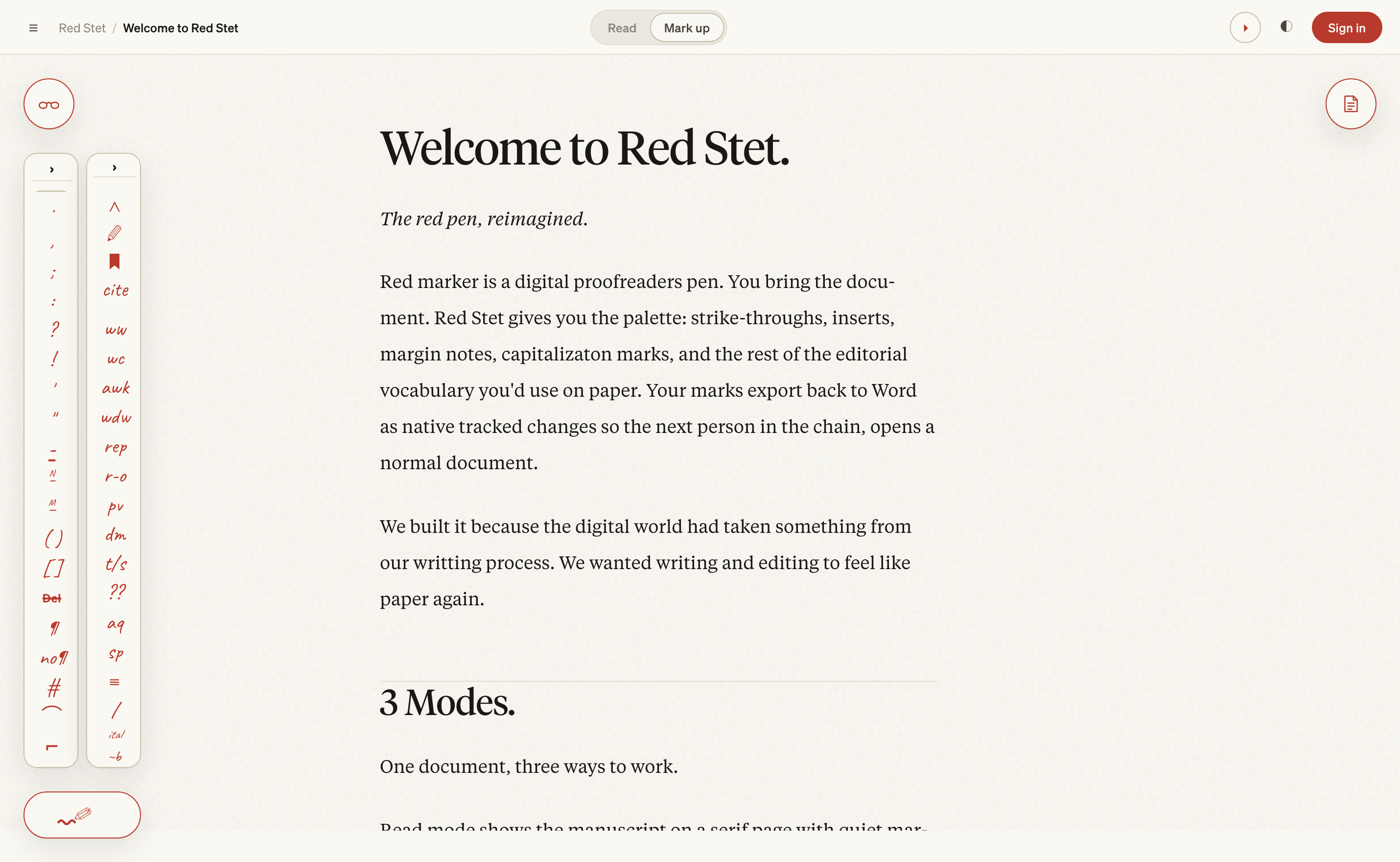
A clean classical editing surface, plus an opt-in receipt of how the work came together. Plain-text events inside the editor — nothing else. The receipt is yours.
Real typography. Distraction-free. Markdown rendered as a book would render it, not as a wireframe with a checkbox.
No popups, no AI-suggestion clutter. Just the page, your voice, and the marks that come back.
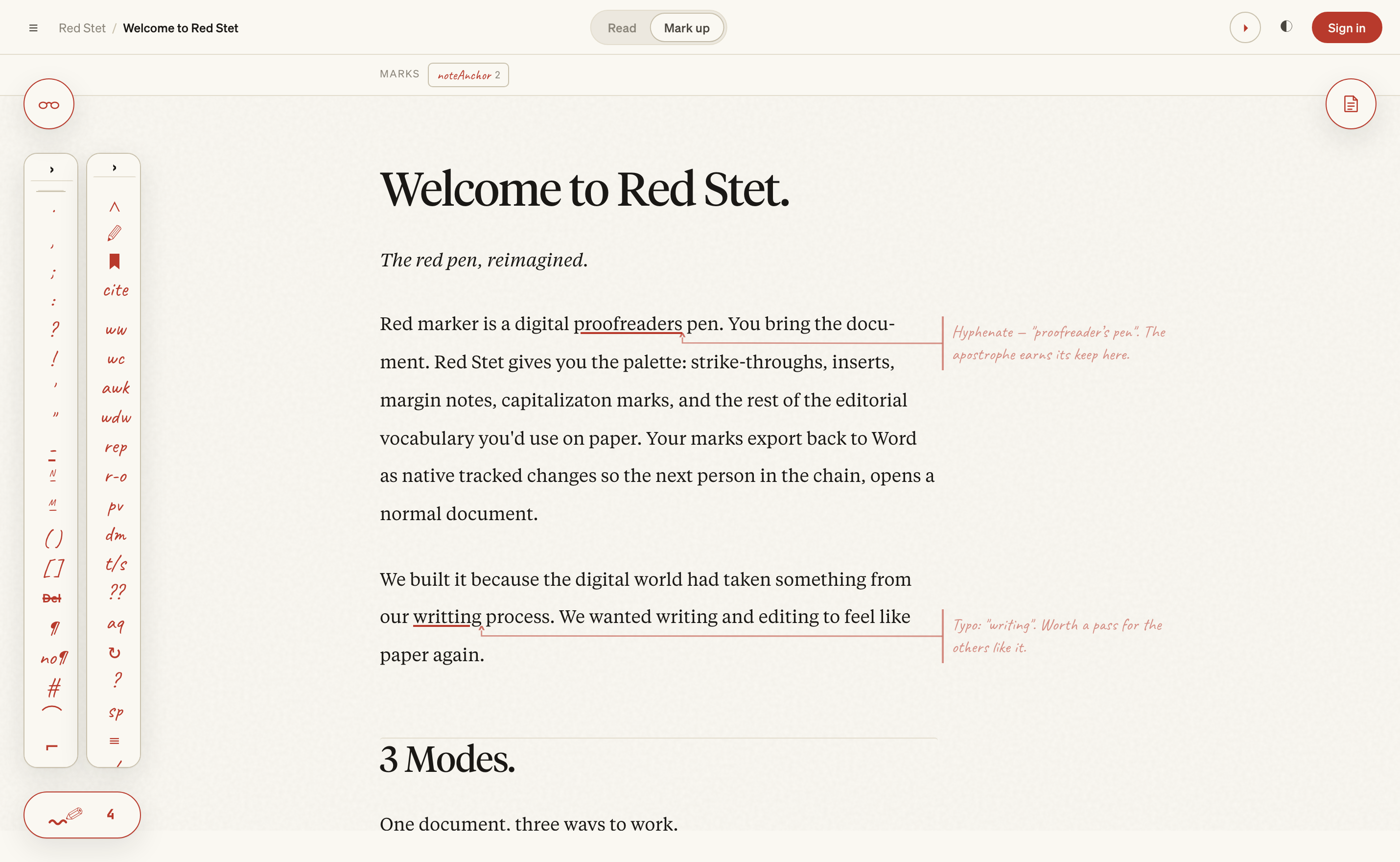
Editorial marks that look like editorial marks. Notes that nest into margins. Comment threads, suggested rewrites, queries. Reviewers can layer their work without trampling each other.
The author's draft never changes underneath — marks live above it.
The recording is plain-text events inside the editor — keystrokes, the text you paste, copy or cut, cursor moves, timestamps. A signed-in session is encrypted on your account when the session ends. Signed out, sessions stay only in this browser. Signing in later does not upload sessions that already ended. Export a .red.md to keep a copy. A session still running when you sign in uploads when it ends. A scrubber timeline walks you through the work: the pauses, the corrections, the paragraphs that came together one word at a time. Useful for self-study, for editorial review, and as the receipt you hand someone when authorship matters.
Opt-in at sign-up; per-doc OFF switch when you want to draft something without a receipt. Your account-level setting stays put.
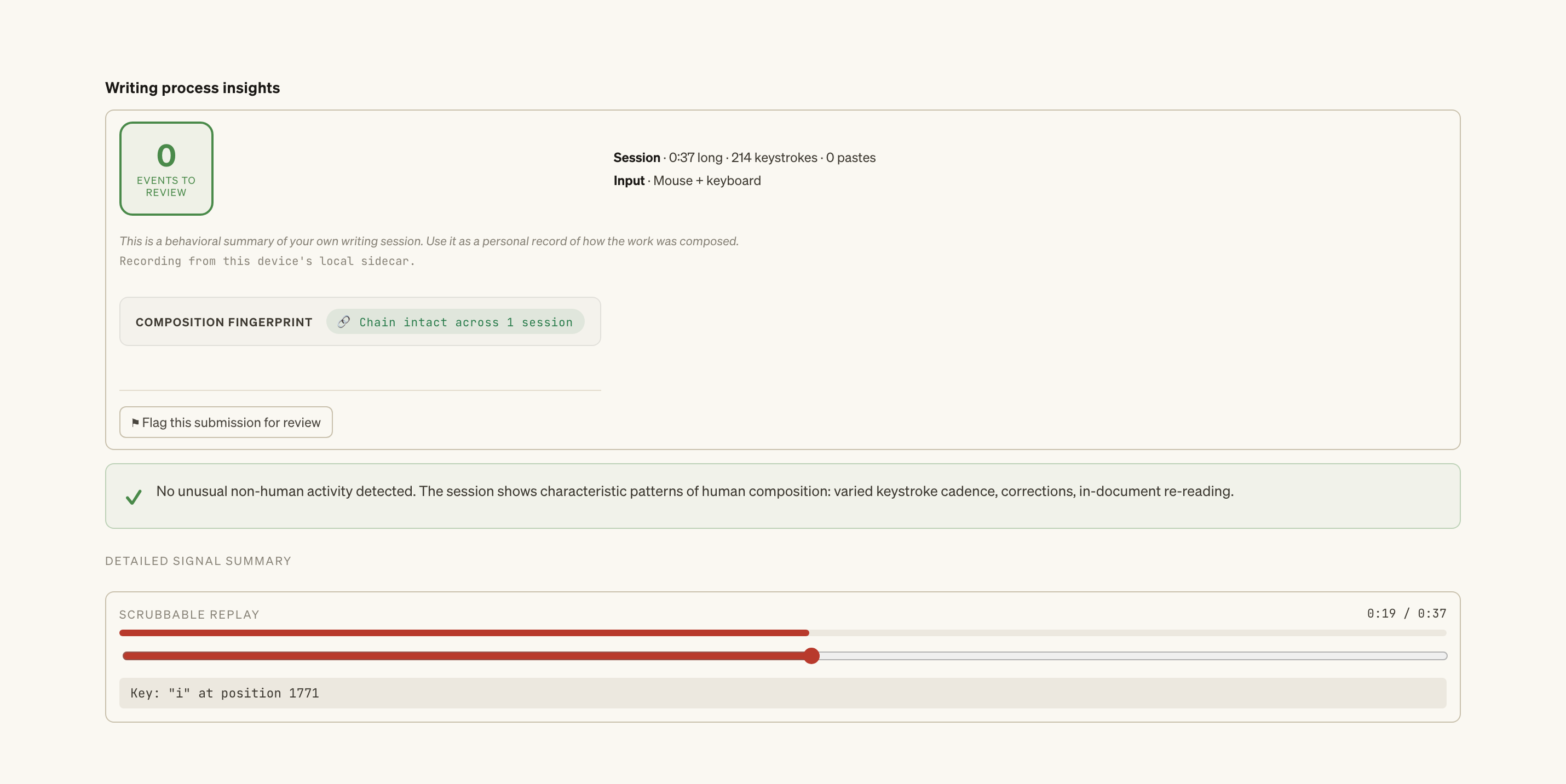
The way you write is already yours — your typing rhythm, your revision patterns, the phrases you reach for, the way your sentences open. Red Stet keeps it as a composition fingerprint: not a label somebody assigns you, but a history built out of your own sessions, where every session in it traces back to a signed recording anyone can check.
It compounds. A month in, it's a sketch. Five years in, it's a body of evidence that can't be manufactured after the fact — and the further back the record runs, the harder it is to dispute.
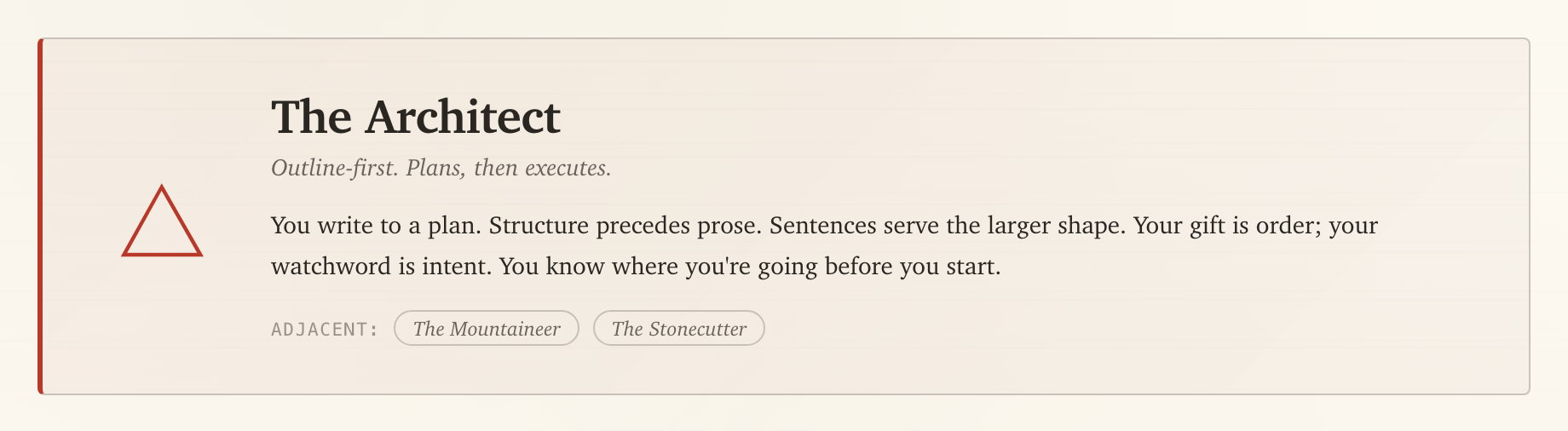
Red Stet also names the shape it sees: one of nine writing archetypes — The Stonecutter, The Wanderer, The Architect, The Mountaineer, and others, each with a written description. That's a readable summary of the record, not a substitute for it.
.red.md file.docx with tracked changes preserved, PDF with annotations preserved, .red.md with the full provenance bundleWriters care about voice. Editors care about the process. One tool, built for both.
Red Stet isn't trying to write for you. It isn't going to suggest a better paragraph or rewrite your prose to sound like everyone else's. It's a place to do the work, with marks that feel natural to paper and a record that stays with the document forever.
And as AI tools become part of how everyone writes — to brainstorm, to revise, to draft — Red Stet is the proof your voice is still yours.
The big "Docs" are in the AI race. For them, author authenticity is a side note. For us, it's the whole document. — Why Red Stet
Every document you write here carries a verified record of how it was written. Years from now, when authorship is the question, the answer is already on the page.